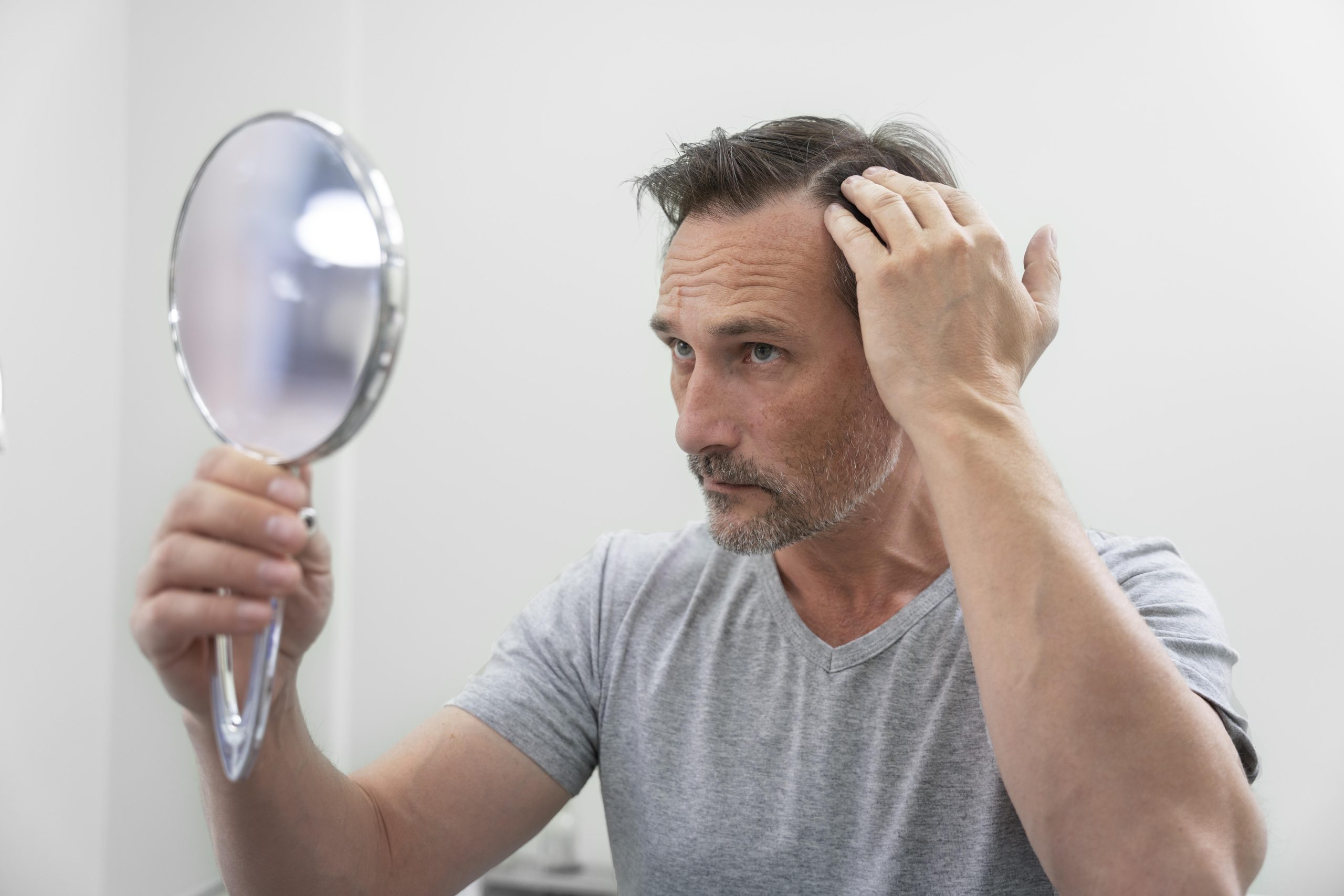
Did you ever catch yourself staring at a few loose strands of hair in the sink? Or catch a glimpse of your reflection in the mirror and say to yourself, “Geez, my hairline used to be farther up than this”? If this has happened, don’t fret. You’re not alone. Millions of men around the world have had this moment of realization – when you recognize hair changes and thinning, or apparently falling out. It’s such a personal process that not only affects your appearance, but also your sense of self and self-worth.
Male hair loss isn’t a cosmetic issue – it’s a combination of genetics, hormones, lifestyle factors, and sometimes even just your body trying to make a point. But hear me out first: knowledge is power. Understanding the scientific mechanisms behind sudden hair loss empowers you to take informed action. Before panic sets in, it’s important to understand the difference between normal daily hair loss (50-100 strands per day) and excessive shedding that signals an underlying issue.

Understanding Sudden Hair Loss: What’s Happening
Androgenetic Alopecia and Male Pattern Baldness
We need power in order to take back this situation, so let’s start with facts. After all, knowledge is power. Hair loss can feel like a very personal assault on your identity and could be caused by a variety of factors, ranging from hormones, stress, and genetics to lifestyle.
First up, we have genetics – the cards you were dealt before you even took your first breath. About 95% of male hair loss is caused by androgenetic alopecia, commonly referred to as pattern baldness. Statistics, however shows that not only men have this problem. Women also experience this as well, and this takes an emotional toll on them because society expects them to look a certain way.
Hormonal Causes: DHT and Testosterone
The science behind it is both intriguing and annoying. DHT (dihydrotestosterone), a hormone that is like kryptonite to your hair, can cause sensitivity in your hair follicles. Some people hit the genetic lottery and their follicles couldn’t care less about DHT. Others? Well, their follicles practically throw a going-away party every time DHT shows up. This process leads to hair follicle miniaturization, where each growth cycle produces thinner, shorter hairs until eventually the follicle stops producing visible hair entirely.
The key mechanism involves hormonal imbalance and DHT binding to androgen receptors in scalp hair follicles. Pattern baldness is genetic, often inherited from either parent, and the sensitivity to DHT determines when and how rapidly you’ll experience thinning.
Stress-Related Hair Loss (Telogen Effluvium)
Now we get to something that will absolutely fire you up – understanding the connection between stress, lifestyle factors, and hair loss is crucial for prevention and treatment.
Consider this: you experience anxiety and depression when you begin to lose your hair. But guess what? That stress and depression can actually accelerate hair loss! Do you feel like your mind and body are against you? It has been shown that individuals with major depressive disorder are significantly more likely to experience hair loss, and those who experience hair loss are also more likely to experience depression. The medical term for stress-induced shedding is telogen effluvium, where stress impacts hair follicles by pushing them prematurely into the resting phase of the hair growth cycle phases.
Learning more about understanding and preventing hair loss in men can help you take proactive steps. Chronic stress hormones (particularly cortisol) directly damage the hair follicle stem cells responsible for regeneration. This creates a vicious cycle where worry about hair loss generates more stress, which in turn accelerates the shedding.
Nutritional Deficiencies and Hair Health
Something that really gets under my skin – we’re living in an era where we’re literally stressing ourselves bald. Premature hair loss can result from a variety of factors, including poor diet, environmental pollutants, lifestyle choices, and continuous stress. Most times we are so focused on other aspects of our lives that we neglect the basic hair routines, including maintaining a proper hair care routine.
Nutritional deficiencies, particularly in iron, zinc, and biotin, can cause your hair follicles to become underproductive. When nutritional deficiencies affect hair, the body prioritizes vital organs over hair production, leading to telogen effluvium. Other essential nutrients include vitamin D, vitamin B12, and protein – all critical building blocks for healthy hair growth.
And don’t get me started on the chemicals we expose our hair to daily – some of the products we use thinking we’re helping our hair (like those causing dandruff and scalp conditions) are actually contributing to its demise. Inflammatory scalp conditions can compound hair loss problems by creating an unhealthy environment for follicles.
The Psychological Impact of Hair Loss
Hair Loss and Mental Health: The Connection
Now, let’s get real about what happens in your head when you start losing your hair. This is before you assume that this is just a matter of vanity or shallow worries. We’re talking about anxiety, depression, social withdrawal, and a complete transformation of how someone sees themselves in the mirror.
The thing that excites me about this subject, though, is that, even though you may not be able to control every hair on your head, you do have complete control over how you react to it. The psychological impact is real – there’s a bidirectional relationship between mental health and hair appearance. Hair loss significantly impacts quality of life, self-esteem, and social functioning, but understanding this connection is the first step toward managing both the physical and emotional aspects.
Self-Esteem, Identity, and Confidence
Your hair is generally attributed to your identity, self-expression, and confidence. When you start losing it, you are not just losing strands; you can feel like you are losing part of yourself. The emotional aspect is vital for finding the right treatment. Evidence suggests that working on the physical and the emotional aspects leads to improved results.
Many men report feeling less attractive, older than their age, and less confident in professional and social situations. The hair loss and depression connection is well-documented in medical literature, with studies showing that addressing the psychological component through counseling, support groups, or cognitive behavioral therapy can significantly improve treatment outcomes and quality of life. For practical advice on maintaining confidence, explore strategies for dealing with thinning hair and confidence-boosting styles.
Evidence-Based Solutions and Treatment Options
Medical Treatments: What Actually Works
You have more power over this than you think. Though genetics cannot be changed, you can influence how your body responds to the factors of hair loss. Early intervention improves outcomes – the sooner you address hair loss, the better your chances of maintaining and regrowing hair.
The gold standard treatments are Minoxidil and Finasteride, both FDA-approved hair loss treatments. Minoxidil (available over-the-counter) stimulates hair follicles and prolongs the growth phase, while Finasteride (prescription) blocks the enzyme that converts testosterone to DHT. Clinical studies show these work most successfully when started early in the hair loss process.
Lifestyle Changes for Hair Health
Lifestyle modifications help significantly. Managing stress through meditation, exercise, or therapy directly impacts cortisol levels and hair follicle health. Getting adequate sleep (7-9 hours) supports hormone regulation and cellular repair processes essential for hair growth.
Regular exercise improves blood circulation to the scalp, delivering nutrients and oxygen to hair follicles. Reducing alcohol consumption and quitting smoking both improve hair health by reducing oxidative stress and improving nutrient delivery.
Nutrition and Supplements for Hair Growth
Science has proven that certain nutrients support health for hair. Your body is like a garden: it needs special nutrients to grow incredible healthy hair. A diet rich in lean proteins, leafy greens, nuts, seeds, and fatty fish provides the building blocks for strong hair.
Consider evidence-based supplements after consulting with a healthcare provider. Biotin, vitamin D, iron (if deficient), and omega-3 fatty acids all support hair health. Some men also explore hair growth oils and treatments like rosemary oil, which recent studies suggest may be as effective as minoxidil for some individuals.
When to Consult a Healthcare Professional
It’s been seen by research that hair follicles may be pushed to a resting stage due to constant stress, which leads to uncontrollable hair fall. Consult a dermatologist if you notice:
- Sudden, progressive thinning or patchy hair loss
- Hair loss accompanied by scalp pain, itching, or scaling
- Loss of more than 50 to 100 hairs daily
- Hair loss following medication changes or illness
- Eyebrow or body hair loss alongside scalp hair
Starting treatment when you first notice thinning improves your chances of maintaining and re-growing hair. Clinical tests verify that treatments work most successfully when they’re started early on.
Building Confidence During Hair Loss
Psychological Strategies and Self-Acceptance
Despite the external pressures acting on you, you need to build self-confidence in this context. It is where change happens, and you stop being a victim of circumstances but start claiming ownership of how you respond to them.
Acceptance of self is acknowledging truth without inflicting additional pain on it. Yeah, you’re losing hair. It sucks, and it’s totally normal to feel upset about it. But here’s the thing – that doesn’t make you broken, less than anyone else, or somehow not worthy of having a good life. Your hair doesn’t define your worth as a person, even when it feels like the most important thing in the world.
Everyday make use of positive self-talk and affirmations like “I choose to focus on what I can control,” “I am more than my looks,” and “My worth isn’t determined by my hair.” These cognitive reframing techniques, supported by psychological research, help break the negative thought patterns that amplify distress.
Support Systems and Community Resources
Remember that hair loss treatment works best when treating all channels of treatment. Existing research proves that the application of traditional treatments with lifestyle change and psychological therapy yields the best result.
Your hair loss experience is yours alone. Whether you are only starting to notice the effects or have been dealing with this for many years, there is always hope and always a path ahead. The science keeps improving, the treatments get better, and we learn more about this condition every day.
Your experience of hair loss does not have to define you – but how you approach dealing with it and tackling it head-on can transform you. Make that move today. No matter if it’s discussing with a physician, implementing some dietary changes, or even simply reading more about your condition, you’re already well on the path towards taking control of your hair health journey.
Recall, transformation starts the moment you decide to take action. Are you set to start your transformation?
This article is solely for information and does not form medical advice. Always seek the advice of a qualified healthcare professional before starting any treatment.
Did you ever catch yourself staring at a few loose strands of hair in the sink? Or catch a glimpse of your reflection in the mirror and say to yourself, “Geez, my hairline used to be farther up than this”? If this has happened, don’t fret. You’re not alone. Millions of men around the world have had this moment of realization – when you recognize hair changes and thinning, or apparently falling out. It’s such a personal process that not only affects your appearance, but also your sense of self and self-worth.
Male hair loss isn’t a cosmetic issue – it’s a combination of genetics, hormones, lifestyle factors, and sometimes even just your body trying to make a point. But hear me out first: knowledge is power. Understanding the scientific mechanisms behind sudden hair loss empowers you to take informed action. Before panic sets in, it’s important to understand the difference between normal daily hair loss (50-100 strands per day) and excessive shedding that signals an underlying issue.
Understanding Sudden Hair Loss: What’s Happening
Androgenetic Alopecia and Male Pattern Baldness
We need power in order to take back this situation, so let’s start with facts. After all, knowledge is power. Hair loss can feel like a very personal assault on your identity and could be caused by a variety of factors, ranging from hormones, stress, and genetics to lifestyle.
First up, we have genetics – the cards you were dealt before you even took your first breath. About 95% of male hair loss is caused by androgenetic alopecia, commonly referred to as pattern baldness. Statistics, however shows that not only men have this problem. Women also experience this as well, and this takes an emotional toll on them because society expects them to look a certain way.
Hormonal Causes: DHT and Testosterone
The science behind it is both intriguing and annoying. DHT (dihydrotestosterone), a hormone that is like kryptonite to your hair, can cause sensitivity in your hair follicles. Some people hit the genetic lottery and their follicles couldn’t care less about DHT. Others? Well, their follicles practically throw a going-away party every time DHT shows up. This process leads to hair follicle miniaturization, where each growth cycle produces thinner, shorter hairs until eventually the follicle stops producing visible hair entirely.
The key mechanism involves hormonal imbalance and DHT binding to androgen receptors in scalp hair follicles. Pattern baldness is genetic, often inherited from either parent, and the sensitivity to DHT determines when and how rapidly you’ll experience thinning.
Stress-Related Hair Loss (Telogen Effluvium)
Now we get to something that will absolutely fire you up – there’s a psychological impact of hair loss that creates what many call a “spiral of destruction.”
Consider this: you experience anxiety and depression when you begin to lose your hair. But guess what? That stress and depression can actually accelerate hair loss! Do you feel like your mind and body are against you? It has been shown that individuals with major depressive disorder are significantly more likely to experience hair loss, and those who experience hair loss are also more likely to experience depression. The medical term for stress-induced shedding is telogen effluvium, where stress impacts hair follicles by pushing them prematurely into the resting phase of the hair growth cycle phases.
Understanding the stress and scalp health connection is crucial because chronic stress hormones (particularly cortisol) directly damage the hair follicle stem cells responsible for regeneration. This creates a vicious cycle where worry about hair loss generates more stress, which in turn accelerates the shedding.
Nutritional Deficiencies and Hair Health
Something that really gets under my skin – we’re living in an era where we’re literally stressing ourselves bald. Premature hair loss can result from a variety of factors, including poor diet, environmental pollutants, lifestyle choices, and continuous stress. Most times we are so focused on other aspects of our lives that we neglect the basic hair routines, including maintaining a proper hair care routine.
Nutritional deficiencies, particularly in iron, zinc, and biotin, can cause your hair follicles to become underproductive. When nutritional deficiencies affect hair, the body prioritizes vital organs over hair production, leading to telogen effluvium. Other essential nutrients include vitamin D, vitamin B12, and protein – all critical building blocks for healthy hair growth.
And don’t get me started on the chemicals we expose our hair to daily – some of the products we use thinking we’re helping our hair (like those causing dandruff and scalp conditions) are actually contributing to its demise. Inflammatory scalp conditions can compound hair loss problems by creating an unhealthy environment for follicles.
The Psychological Impact of Hair Loss
Hair Loss and Mental Health: The Connection
Now, let’s get real about what happens in your head when you start losing your hair. This is before you assume that this is just a matter of vanity or shallow worries. We’re talking about anxiety, depression, social withdrawal, and a complete transformation of how someone sees themselves in the mirror.
The thing that excites me about this subject, though, is that, even though you may not be able to control every hair on your head, you do have complete control over how you react to it. The psychological impact is real – there’s a bidirectional relationship between mental health and hair appearance. Hair loss significantly impacts quality of life, self-esteem, and social functioning, but understanding this connection is the first step toward managing both the physical and emotional aspects.
For comprehensive guidance on the mental health aspects, read about the psychological impact of hair loss and strategies for building confidence from within.
Self-Esteem, Identity, and Confidence
Your hair is generally attributed to your identity, self-expression, and confidence. When you start losing it, you are not just losing strands; you can feel like you are losing part of yourself. The emotional aspect is vital for finding the right treatment. Evidence suggests that working on the physical and the emotional aspects leads to improved results.
Many men report feeling less attractive, older than their age, and less confident in professional and social situations. The hair loss and depression connection is well-documented in medical literature, with studies showing that addressing the psychological component through counseling, support groups, or cognitive behavioral therapy can significantly improve treatment outcomes and quality of life.
Evidence-Based Solutions and Treatment Options
Medical Treatments: What Actually Works
You have more power over this than you think. Though genetics cannot be changed, you can influence how your body responds to the factors of hair loss. Early intervention improves outcomes – the sooner you address hair loss, the better your chances of maintaining and regrowing hair.
The gold standard treatments are Minoxidil and Finasteride, both FDA-approved hair loss treatments. Minoxidil (available over-the-counter) stimulates hair follicles and prolongs the growth phase, while Finasteride (prescription) blocks the enzyme that converts testosterone to DHT. Clinical studies show these work most successfully when started early in the hair loss process.
Lifestyle Changes for Hair Health
Lifestyle modifications help significantly. Managing stress through meditation, exercise, or therapy directly impacts cortisol levels and hair follicle health. Getting adequate sleep (7-9 hours) supports hormone regulation and cellular repair processes essential for hair growth.
Regular exercise improves blood circulation to the scalp, delivering nutrients and oxygen to hair follicles. Reducing alcohol consumption and quitting smoking both improve hair health by reducing oxidative stress and improving nutrient delivery.
Nutrition and Supplements for Hair Growth
Science has proven that certain nutrients support health for hair. Your body is like a garden: it needs special nutrients to grow incredible healthy hair. A diet rich in lean proteins, leafy greens, nuts, seeds, and fatty fish provides the building blocks for strong hair.
Consider evidence-based supplements after consulting with a healthcare provider. Biotin, vitamin D, iron (if deficient), and omega-3 fatty acids all support hair health. Some men also explore hair growth oils and treatments like rosemary oil, which recent studies suggest may be as effective as minoxidil for some individuals.
When to Consult a Healthcare Professional
It’s been seen by research that hair follicles may be pushed to a resting stage due to constant stress, which leads to uncontrollable hair fall. Consult a dermatologist if you notice:
- Sudden, progressive thinning or patchy hair loss
- Hair loss accompanied by scalp pain, itching, or scaling
- Loss of more than 50 to 100 hairs daily
- Hair loss following medication changes or illness
- Eyebrow or body hair loss alongside scalp hair
Starting treatment when you first notice thinning improves your chances of maintaining and re-growing hair. Clinical tests verify that treatments work most successfully when they’re started early on.
Building Confidence During Hair Loss
Psychological Strategies and Self-Acceptance
Despite the external pressures acting on you, you need to build self-confidence in this context. It is where change happens, and you stop being a victim of circumstances but start claiming ownership of how you respond to them.
Acceptance of self is acknowledging truth without inflicting additional pain on it. Yeah, you’re losing hair. It sucks, and it’s totally normal to feel upset about it. But here’s the thing – that doesn’t make you broken, less than anyone else, or somehow not worthy of having a good life. Your hair doesn’t define your worth as a person, even when it feels like the most important thing in the world.
Everyday make use of positive self-talk and affirmations like “I choose to focus on what I can control,” “I am more than my looks,” and “My worth isn’t determined by my hair.” These cognitive reframing techniques, supported by psychological research, help break the negative thought patterns that amplify distress.
Support Systems and Community Resources
Remember that hair loss treatment works best when treating all channels of treatment. Existing research proves that the application of traditional treatments with lifestyle change and psychological therapy yields the best result.
Your hair loss experience is yours alone. Whether you are only starting to notice the effects or have been dealing with this for many years, there is always hope and always a path ahead. The science keeps improving, the treatments get better, and we learn more about this condition every day.
Your experience of hair loss does not have to define you – but how you approach dealing with it and tackling it head-on can transform you. Make that move today. No matter if it’s discussing with a physician, implementing some dietary changes, or even simply reading more about your condition, you’re already well on the path towards taking control of your hair health journey.
Recall, transformation starts the moment you decide to take action. Are you set to start your transformation?
This article is solely for information and does not form medical advice. Always seek the advice of a qualified healthcare professional before starting any treatment.