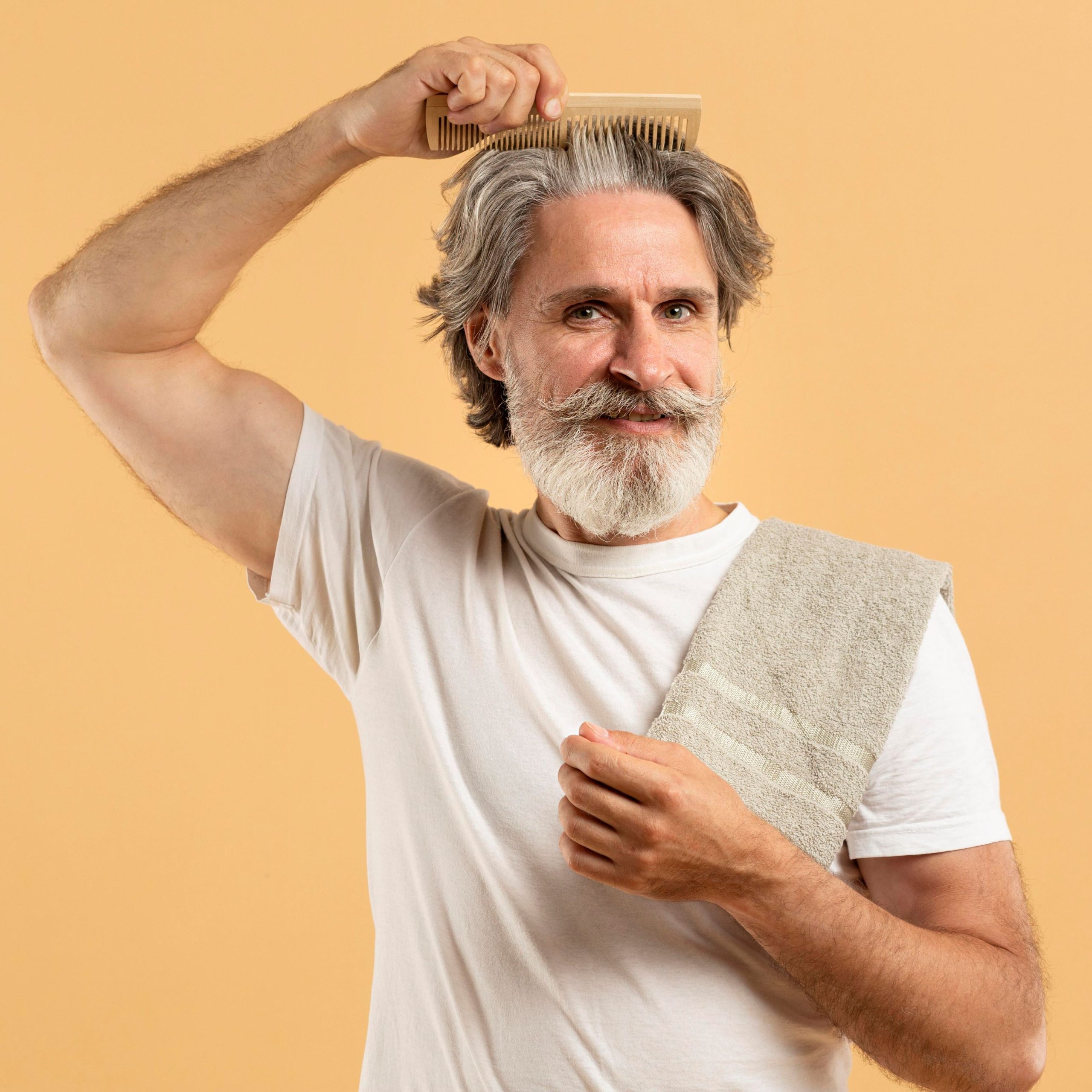
Listen closely, my friend; the subject I want to talk to you about is possibly something that looks back at you every morning in the mirror! That silver thread that seemingly appears out of nowhere, teasingly taunting you with it is time that will never come back. Most people don’t know that grey hairs as a sign of aging or a genetic lottery ticket, is much deeper. It’s a complex pattern of issues, most of which you’re able to guide more than you think.
After decades of telling us that grey hair is just part of aging, or worse, that it is a genetic sentence handed down from ancestors, new research is detailing a liberating truth and one that will empower you: genetics are only 10%. Yes, that means 90% of your hair journey is totally in your control! If you’re noticing premature grey hair in men under 30, understanding these environmental factors is the first step to taking action.

Imagine if you were told that 90% of your financial success was not determined by where you were born and thus, you would want to learn the controllable components in the environmental complexities involved with financial literacy! This concept is the same for your hair journey through time. Grey hair is not only a sign of aging; these silver threads are telling a story around your lifestyle choices, its time spent in the environment, and naturally the amount of stress endured over time.
The science is both cool and honestly revolutionary. All your hair follicles have very dedicated cells involved known as melanocytes which you can refer to as tiny artists hired to provide pigment to each and every hair. When these cells, aka artists, start to take longer to write you a prescription for each hair, is when you start to see the grey. The big concern is there are many factors that hold back the timing itself. You can start addressing environmental assaults, oxidative stress, nutritional deficiencies, and hormonal imbalances.
I’ve seen people improve their energy, health, and quality of life from changing the causes instead of putting up with the symptoms. The truth is that it is the same with your hair. It is perfectly ok to want to look good for yourself, but it is not only vanity for the sake of vanity. It is because each grey hair is your body telling you something meaningful about your outside world and your body’s health. Understanding the main cause of hair loss and greying can help you take proactive steps.
What Causes Premature Grey Hair? The Environmental Factor
Let me show you what is actually happening every day to your hair: as you step outside, you are being attacked in concert by invisible armies at your follicles. Sounds dramatic? It should – the environmental conditions creating the early greying of your hair are more aggressive than you may think.
UV Radiation and Sun Damage
First: ultraviolet radiation: every time you step into sunlight without protection, you are literally weakening your hair follicles with the UV irradiation instead of encouraging melanin production for hair color. It is like having microscopic sandpaper compromising your hair pigment factories. However, what is actually shocking is that it is not only direct sun exposure. The cumulative daily effects of UV (even when cloudy, or only through a window in your commute) are at work daily eating away your hair’s health. UV exposure causes melanin degradation and protein damage in hair fibers; color loss is a documented outcome (Rosenberg & Gilchrest, 2004).
Pollution and Urban Living
Then there is pollution: the silent assassin that you cannot always see, but you can always feel. Chemical substances will cause you to lose your hair color prematurely. If you live in an urban environment, your hair is subjected to chemicals practically daily. Just think about if pollution can rust and corrode metal and create aging in buildings, what do you think the pollution is doing to your fragile hair follicles?
The pollution aspect is mind-blowing because it can differ so considerably, depending on your local area. Your zip code might be affecting your hair color more than your genetic code!
Smoking and Grey Hair: The 2.5x Risk Factor
But one environmental factor we have done to ourselves may be the most damaging: cigarette smoking. The studies are indeed staggering: smokers develop grey hair two and a half times quicker than non-smokers. Shin et al. (2015) found smoking nearly doubled risk of premature hair greying in young men, independent of genetic background. That’s a big difference; a very big difference in aging right on the top of your head.
Chronic Stress and Hair Pigmentation
And then we have stress – not the typical kind, but chronic low-level stress that many of us simply tolerate rather than acknowledge. A recent, yet remarkable study has demonstrated that psychological factors enter into the aging of hair. Worrying, anxiety, not sleeping all alter the color of your hair.
In addition, alcohol consumption will also promote this destruction. If you’re someone who drinks excessively, it’s not just your liver that becomes affected, or your decision making; alcohol consumption will promote inflammation and changes in hormones that also contribute to the greying process. Essentially, each drink you have is triggering further premature greying.
This is now starting to get interesting scientifically, because all of these environmental factors actually have one factor in common in their patterns of destruction – oxidative stress. Think of oxidative stress as internal rust. Oxidative stress will breakdown your entire cellular machinery, including the melanocytes that make pigment in your hair, in the same way rust breaks down metal.
However, there is a glimmer of hope in understanding how it works. If oxidative stress is your common adversary, then antioxidants are the bodyguards for your hair. This is not some feel-good wellness crud, this is hard, tangible science that is showing you how to retaliate.

Nutrition and Hormones: The Hair Color Connection
Now, let’s delve into something that is going to be completely surprising: the complicated relationship between your diet, hormones, and hair color. Just taking a multivitamin, and waiting to see what happens, is not enough. All of this is about understanding that your body is essentially a wonderful chemistry laboratory and any one particular nutrient plays an important role in keeping your hair vibrant. For a comprehensive guide, explore the essential nutrients your hair follicles need.
Key Nutrient Deficiencies That Accelerate Greying
There is a direct correlation between unexpected greys and vitamin B12 deficiency, especially in vegetarians and vegans who might not be eating enough of it. Now here is the real kicker: B12 is not only responsible for hair color but is also essential for DNA formation and red blood cell creation. When you are B12 deficient, your hair is simply the most obvious aspect of a bigger systemic issue for your body. Your body is not functioning optimally at that point.
Folate and B12, for instance, work together, and if you have any deficiencies in either of those you are not only placing yourself at risk for gray hair, but also the body’s ability to regenerate and repair itself at a cellular level. Iron deficiency can potentially deplete your body’s energy levels, and even impact the color of your hair – if you don’t get enough copper, which is also essential for making melanin, your body can’t produce the pigment your hair needs through melanocyte activity.
But here’s where it gets really interesting: This means both extremes – either not eating enough or eating too much of the wrong foods – fast-tracks the process of greying.
Thyroid Health and Hair Pigment Production
The hormone part of this is equally compelling. Your melanocytes and hair color are influenced by hormones – and, any disruption in those hormone pathways can dramatically change hair color. Take hypothyroidism, for instance, and it’s not just that you are tired/cold – it also affects the thyroid cascade that happens in areas where hair is actively growing.
Think about this for a second: your hair follicles are actually getting direct instructions from the thyroid gland in your neck about how much pigment to make. Everything slows down when your thyroid is slow, including your energy, metabolism, and yes, the pigmentation of your hair.
Selenium is especially interesting – this trace mineral acts as a potent antioxidant and is crucial for thyroid function. If your body’s ability to neutralize free radical production is impaired from selenium, you have created a perfect storm for premature greying.
Zinc has a variety of roles – protein synthesis, wound healing, immune function, etc. If you are zinc deficient, your hair follicles can’t hold their normal structure and function. It’s like trying to construct a house with low-grade materials instead of high-grade materials – the final product is always inferior.
The timing of meals, as well as the foods you combine in a meal, has a huge influence in the body’s absorption of nutrients and minerals, a consideration most individuals never have for. For example: Vitamin C is known to increase iron absorption, while calcium, besides the teas and coffee’s tannins, reduce iron absorption. So it would seem that if you are drinking coffee with your iron-rich breakfast, you may be undermining the goal of keeping yourself healthy with iron-rich hair color.
Mostly overlooked, magnesium is reported in dozens of metabolic pathways, e.g. over 300 enzyme functions in the body, many of which support cellular energy and protein processes. In layman’s terms, magnesium levels cannot conveniently assist requiring levels of melanocytes in the body.
Your 90-Day Plan to Prevent Premature Greying
This is where we go from the knowledge-based theory that will help empower you to practice that theory. Everything we talked about up to this point is intended to lead to this place: your individualized plan for perhaps reversing some damage and preventing your hair from turning prematurely gray. For more strategies on understanding and preventing hair loss, explore our comprehensive guide.
Dietary Strategies for Hair Health
The dietary approach must get way beyond just dietary. Nutrients of interest, such as vitamin D, vitamin B12, vitamin E, zinc, iron, copper, and selenium, will need to come from foods such as fatty fish, dark leafy greens, nuts, legumes. Ultimately, the goal is to maximize nutrient absorption and benefits, not just to get them in your system.
When you still think about an approach, one that you start your day with, is a diet made up of foods that naturally contain iron and vitamin C. For instance, you could put berries on iron-fortified cereal, or spinach and bell pepper in your omelet. The absorption of iron will increase significantly through vitamin C and provide your hair follicles with the components they need.
At least twice a week, try using fatty fish like sardines, mackerel, or salmon. These are not only excellent sources of omega-3 fatty acids but also contain vitamin D, selenium and high-quality protein – everything your hair needs.

Stress Management and Lifestyle Changes
Managing your stress is not optional, it is necessary. The part that is empowering is this: while we may worry our hair color is beyond hope, and therefore we cannot reverse the greying process, we can. More than just your own mental health improvement through these strategies for managing your stress, these are actually changing your hair color, literally!
I want you to think of each day and the level of stress you face as a knob, like a volume knob that you can practice learning to manage. With each deep breath, each meditation session, each time you choose calm over chaos – you may be moving the dial back at the cellular level to reverse the greying process.
Optimizing your sleep may be an obvious step to take but it is still a must. Your body is designed to repair and regenerate, including the cellular processes involved with providing color to your hair, while you are sleeping deeply. Understanding the connection between sleep, exercise, and hair health can help you build sustainable habits.
Firstly, let’s look at that groundwork: Increased antioxidant enzyme levels, such as catalase (CAT) and superoxide dismutase (SOD) take place through activity such as regular exercise, increasing antioxidant capabilities in your body, all allowing for healthy hair growth and maintenance. Exercise also makes you a body full of defenses, and it isn’t just for aesthetics. In addition to helping you lose weight and gain muscle, exercise makes your own anti-aging molecules.
Environmental Protection Habits
Now onto supplementation strategizing. While one should always be sourcing nutrients from whole food sources, supplement quality matters immensely. Some level of supplementation can be very supportive of cellular function, but supplement form matters and must be bioavailable and well absorbed, otherwise, it is not effective.
The eliminating strategy is equally as important. These are excitotoxic systemic inflammation-stimulating properties that can promote the aging of hair and pigmentation loss. Every cigarette you don’t smoke, every glass of alcohol you resist drinking, or every healthy meal you select instead of processed food is not simply a good choice, but a means to be proactive with your hair’s vitality.
Environmental protection becomes a daily norm. Use UV protection for your hair like you would for your skin. Consider braiding your hair, or wearing a hat during the peak hours of UV sun exposure. In areas with high pollution, consider getting an air purifier for your home and potentially, using hair products that protect against toxins in the environment. Following proven hair care tips for strong, healthy hair will support your prevention efforts.
The hydration factor is critical but not often thought of as important. Your hair follicles need to be properly hydrated in order to function optimally. It’s not just about drinking enough water, but that your body can absorb and use the water, at the cellular level. The hydration of your cells and the use of the water in your cells would depend on having electrolytes, specifically potassium and magnesium, at the right levels.
If you want to think of this as your 90-day transformation challenge, I would encourage you to just follow the food plan, practice stress management techniques daily, and focus on your goal of avoiding injuries and, at the end, observe the changes you have. Take pictures, keep a journal, and monitor energy levels each day. Many people notice changes with new hair in just 3 to 4 months after making these changes consistently to their regimen.
Don’t forget; the sooner you begin the process, the more extensive your potential results will be.
Your hair is not really just a fashion; it is a representation of internal health, your choices, and taking care of yourself. Every hair that does not become grey, well, that is a win for taking a stand against the aging process. Every healthy choice made, is an investment in not just how your feel, but how you look and how confidently you present yourself to the world.
The science is there, the action steps are validated, and the choice to act is personal. The future of your hair – and therefore your vitality and confidence – is largely up to you. The question won’t be whether you can influence the graying process. The question will be whether you use this information to take action. Whether you’re embracing the silver or fighting it, the power is in your hands.